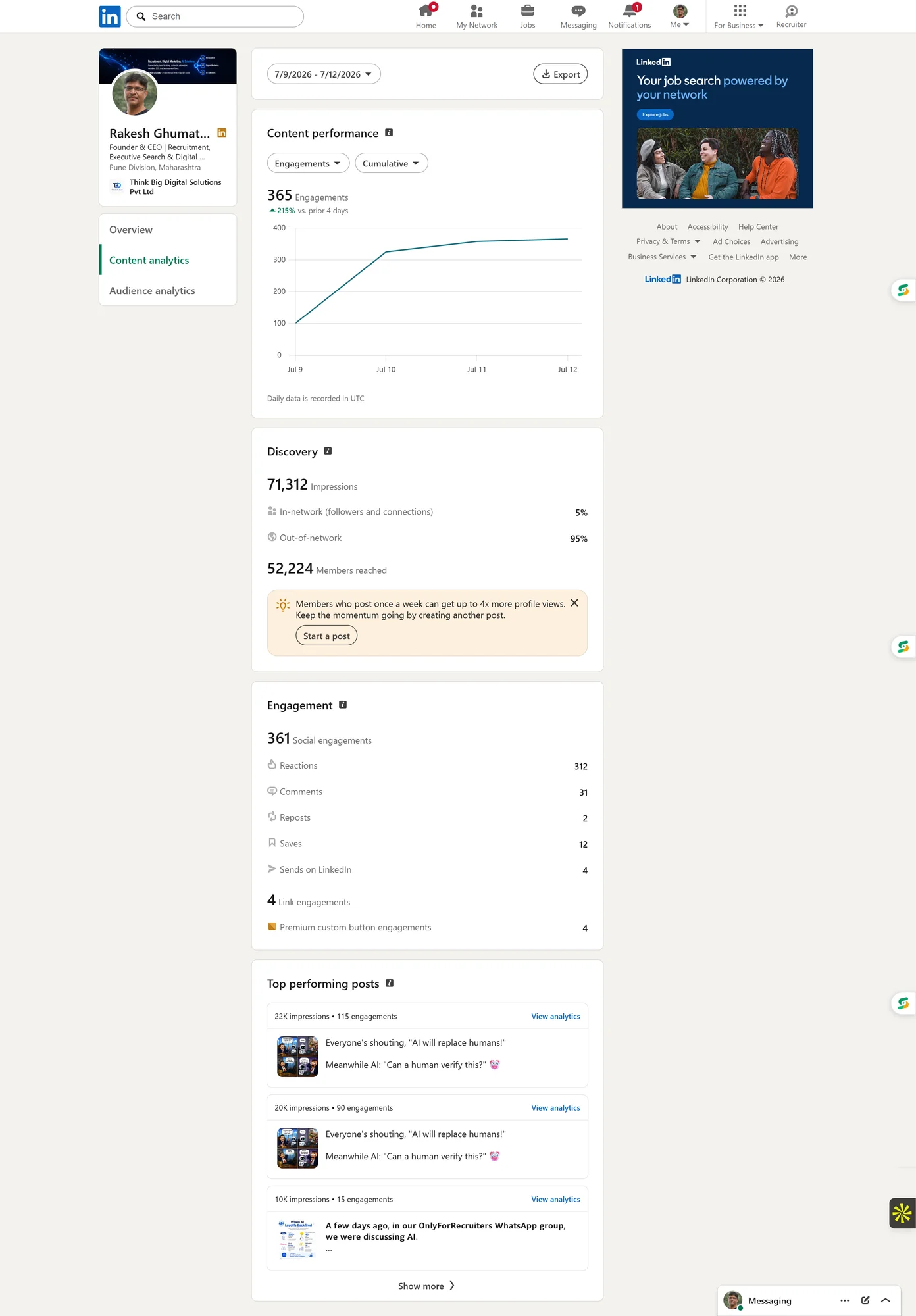
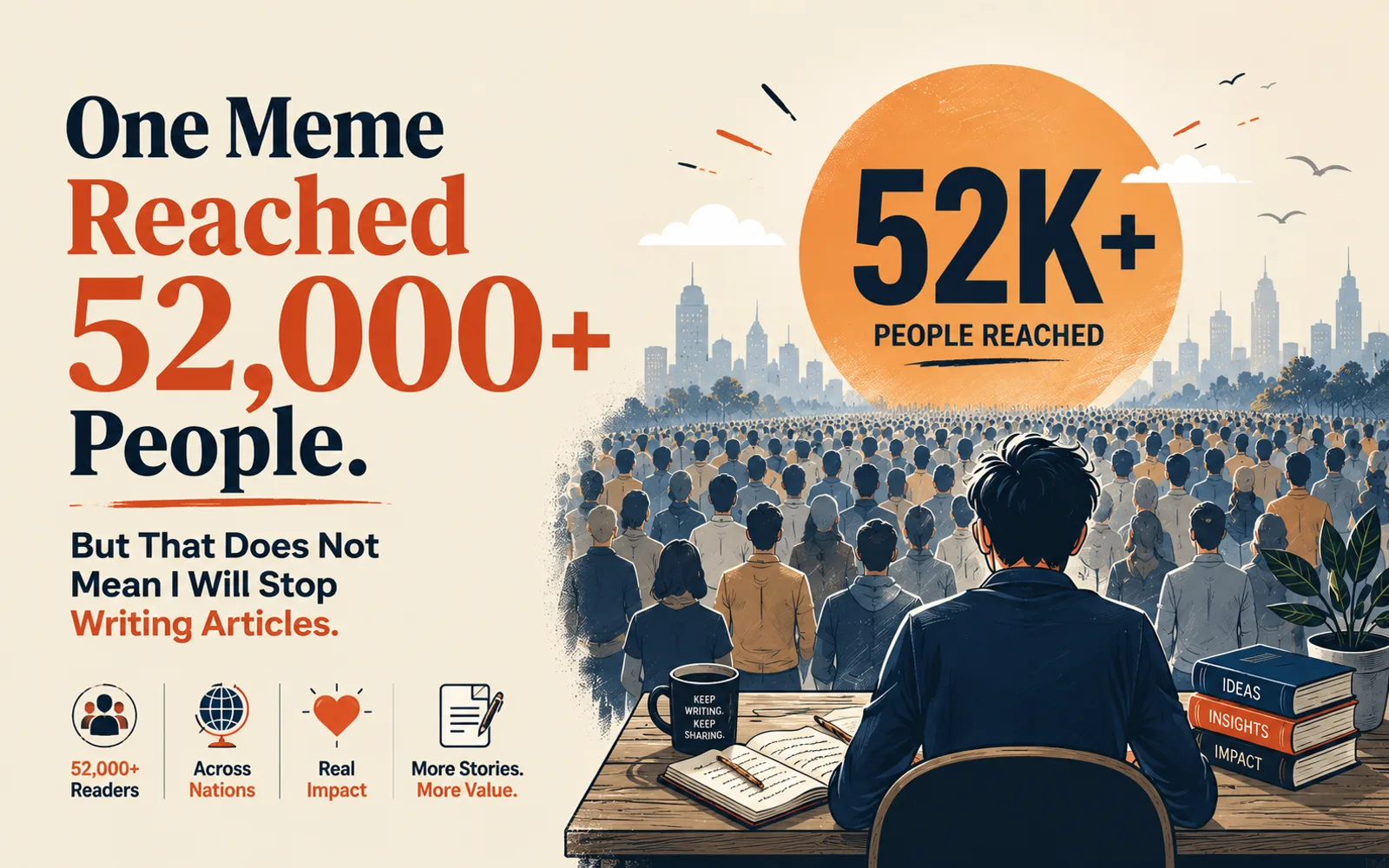
Over four days, my LinkedIn content generated more than 71,000 impressions and reached over 52,000 people. Around 95% of the impressions came from outside my network.
Most of that reach came from a simple meme about AI needing humans to verify its work.
Meme Post: https://lnkd.in/dVhWSwmD
Siddhant Kardile contribution.
Before this, I had written several thoughtful (according to me!) articles about careers, leadership, AI and changing workplace realities. According to me, many of those articles contained more depth and practical value. But they did not receive anything close to this level of visibility.
So, what did I learn? Not that people dislike serious content. Not that articles are useless.
And certainly not that I should now publish only memes.
A meme can attract attention because it is relatable, timely and easy to understand within seconds. An article serves a different purpose. It can explain an idea properly, change someone’s perspective and gradually build credibility and trust.
Even among my articles, some received better engagement than others. People do read thoughtful content but not everyone consumes content in the same way or at the same time.
We also shared the meme in relevant groups, which contributed to its reach. That is another reminder that content creation and content distribution must work together.
The real lesson is that variety matters.
Some ideas deserve a detailed article. Some work better as a short post, visual, story, carousel or meme.
Good content strategy is not about choosing between depth and reach. It is about understanding the audience, selecting the appropriate format and giving each idea the treatment it deserves.
This is also what we are learning and applying at Think Big Digital Solutions: creating content that can attract attention without abandoning substance.
Because the objective is not merely to collect likes.
It is to be noticed, understood, remembered, and trusted.