Introduction
A donor engagement and legacy giving platform wanted to improve its organic search visibility across a broad mix of legacy-giving, estate-planning, donor education, and nonprofit marketing topics.
The platform provides donor marketing support, online tools, donor engagement resources, and website solutions for nonprofits. The account required ongoing SEO work to improve organic visibility for high-intent legacy-giving and donor-planning terms while also expanding coverage for related estate-planning, donor education, and nonprofit resource topics.
This case study focuses on the SEO performance documented between February and May 2026. The goal was not only to increase the number of ranking keywords, but also to improve visibility for important service and product pages, bring in more qualified organic users, and strengthen coverage across Google AI Overviews and other AI-driven search results.
Background
The platform already had a large library of service pages, product pages, planning tools, and educational resources. The opportunity was to create a more structured SEO process around keyword targeting, content relevance, page-level optimization, technical review, and performance tracking.
Priority topics included legacy-giving services, donor engagement websites, online will planning, giving tools, and informational resources that support nonprofit donor education.
Because the website covered both commercial services and informational estate-planning content, the SEO work needed to avoid keyword overlap while making sure the right pages were positioned for the right search intent. This required detailed keyword mapping and ongoing review of organic ranking, traffic, and user-engagement data.
Objectives
Improve organic search rankings: Increase visibility for relevant legacy-giving, donor engagement, nonprofit marketing, and estate-planning terms.
Increase qualified organic traffic: Bring more users to key commercial and informational pages through stronger Google rankings.
Improve keyword coverage: Expand rankings across Top 3, Top 10, Top 20, and Top 50 keyword groups, while moving opportunity terms from positions 21–50 closer to page one.
Strengthen on-site engagement: Increase sessions, engaged sessions, and user activity from organic search visitors.
Improve AI and generative search visibility: Track AI Overviews and cited-page performance, and prioritise blog, FAQ, and answer-focused content opportunities.
SEO Strategy
Keyword Research and Page-Level Mapping
A 140-page SEO URL inventory was prepared to map primary keywords, secondary keywords, search volume, current titles and meta descriptions, and recommended updates. Priority URLs were mapped around topics such as legacy-giving services, donor engagement websites, donor toolkits, and online will planning. Competitor keyword data was also reviewed to identify content and keyword gaps.
On-Page Optimization
Existing titles, meta descriptions, headings, and page copy were reviewed and improved so priority pages could target a clearer primary topic and relevant secondary variations. This was designed to improve page relevance and reduce unnecessary overlap between service, product, and educational pages.
Content and Topical Coverage
Content opportunities were identified across donor education, wills, trusts, endowment planning, giving resources, and related nonprofit content. Existing guides, blogs, resource pages, and product content were used to build broader topical relevance and support high-value commercial pages through internal linking.
Technical SEO and Internal Linking Review
The work plan included technical implementation checks, crawl-audit review, content updates, and internal-linking improvements. This was important for a large website with many legacy pages and resource URLs that needed to remain easy for both users and search engines to discover.
AI Visibility and GEO Monitoring
AI Overview visibility, cited pages, and other SERP features were tracked alongside traditional rankings. Blog and FAQ content priorities were aligned with question-based search behaviour to improve visibility in answer-focused and generative search results.
Performance Tracking and Iteration
Google Search Console, Google Analytics, Semrush, and keyword-rank tracking were used together to review clicks, impressions, rankings, traffic, engagement, and AI visibility. This allowed content and optimization work to be prioritised based on actual search opportunity.
Results and Achievements
Improved Google Search Visibility and Clicks
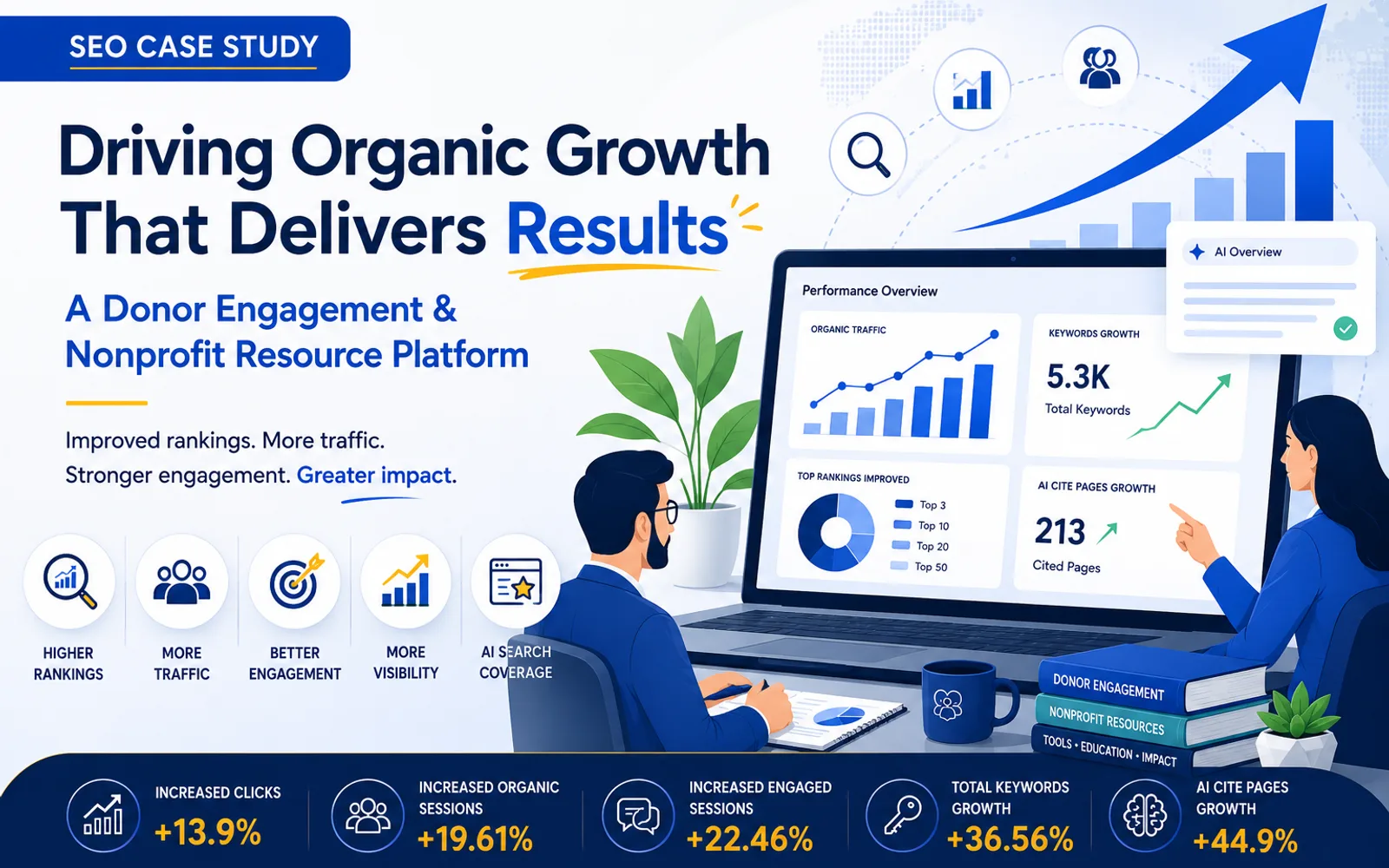
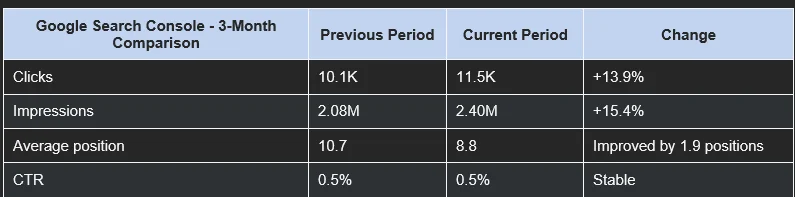
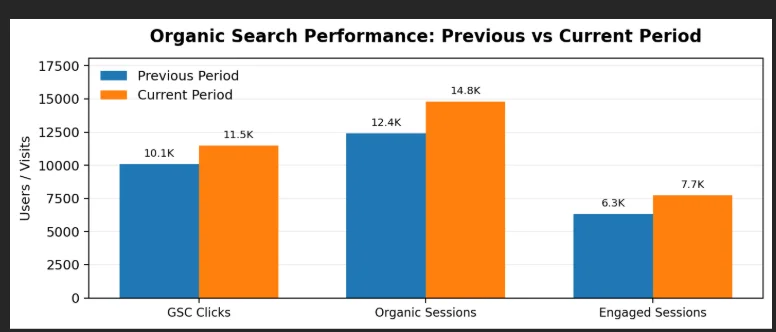
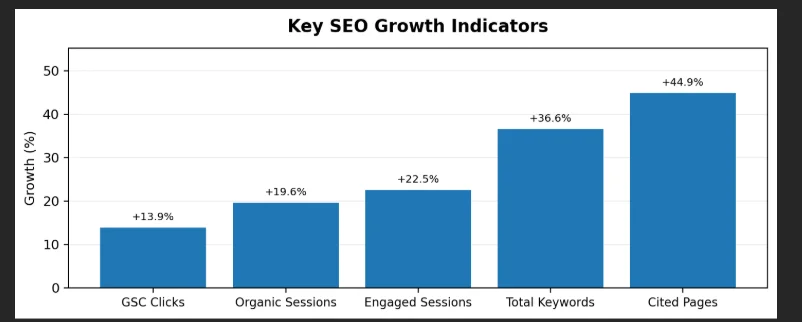
In the three-month comparison reported in April 2026, Google Search Console clicks increased from 10.1K to 11.5K, a 13.9% increase. Impressions increased from 2.08M to 2.40M, a 15.4% improvement, while average ranking position improved from 10.7 to 8.8. CTR remained stable at 0.5%.
This showed that more pages and keywords were moving into stronger positions in Google search results.
Stronger Organic Traffic and User Engagement
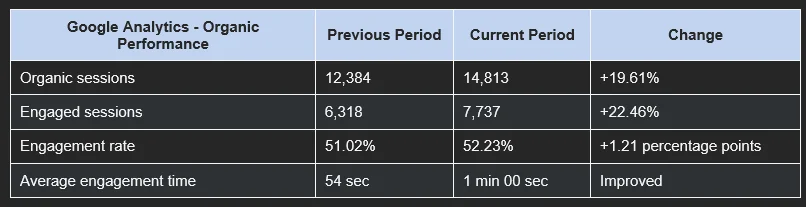
Google Analytics data for February 1 to April 30, 2026 showed organic sessions increasing from 12,384 to 14,813, a 19.61% improvement. Engaged sessions increased from 6,318 to 7,737, up 22.46%. Engagement rate improved from 51.02% to 52.23%, while average engagement time increased from 54 seconds to 1 minute.
This shows that the increase was not only in traffic volume; organic users were also interacting more with the website.
Significant Improvement in Keyword Ranking Coverage
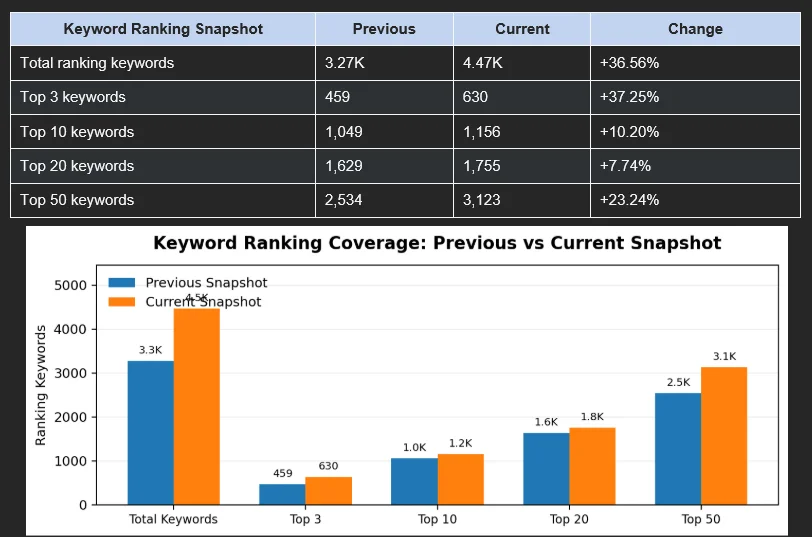
A separate keyword-ranking snapshot showed total ranking keywords increasing from 3.27K to 4.47K, a 36.56% increase. Top 3 rankings grew from 459 to 630, Top 10 rankings increased from 1,049 to 1,156, Top 20 rankings from 1,629 to 1,755, and Top 50 rankings from 2,534 to 3,123. These gains show stronger search coverage and more keywords positioned in competitive ranking groups.
Continued Monthly Visibility Growth
The May visibility report showed total ranking keywords increasing from 5,239 to 5,340. The number of keywords in positions 21–50 grew from 1,620 to 1,849, a 14.1% increase, and keywords in positions 51–100 increased from 1,528 to 1,647.
This created a stronger pipeline of terms that can be moved into the Top 10 through ongoing content refinement, metadata improvement, and internal linking.
Strong Rankings for Important Legacy-Giving Terms
Of the 155 tracked legacy-giving keywords, 138 were ranking in Google’s Top 100 in the May snapshot. 74 of these were in position #1 and 122 were on page one.
This showed strong ranking depth across the platform’s most commercially important and high-intent search terms.
Positive Semrush Visibility and AI Search Signals
Semrush reporting showed estimated organic traffic increasing from 4.6K in January to 5.3K in April. The May snapshot then showed estimated organic traffic at 6.6K and organic keywords at 5.3K, compared with 5.3K traffic and 4.5K keywords in the prior snapshot.
Authority Score remained stable at 33, referring domains remained strong at approximately 1.6K, and cited pages increased from 147 to 213, a 44.9% improvement. This indicates stronger presence not only in standard organic rankings, but also in AI-driven search coverage.
Conclusion
The SEO work delivered clear positive movement across organic visibility, Google Search performance, organic traffic, user engagement, keyword coverage, and AI search visibility.
The account improved both broad keyword coverage and rankings for core legacy-giving terms, while also increasing the number of users arriving from organic search and engaging with the website.
The next phase of the work should continue focusing on keywords already ranking in positions 21–50, where targeted content updates, title and meta improvements, stronger internal linking, FAQs, and answer-focused content can create further Top 10 and AI visibility gains.
The existing data shows that the website has a solid organic foundation and strong momentum for continued growth.